https://iborz.org/ 🧠

https://iborz.org/

(he/him)

Postdoctoral Fellow / Research Associate

Department of Radiology, Mayo Clinic, Rochester, MN, USA

Professional Summary

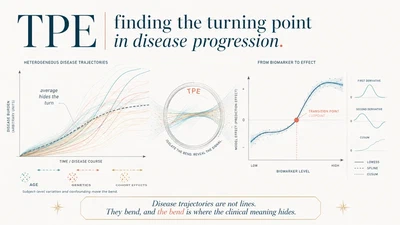
I am a Research Associate in the Department of Radiology at Mayo Clinic, developing and validating quantitative imaging biomarkers for Alzheimer’s disease and related neurodegenerative conditions. My work spans tau PET quantification, multisite MRI harmonization, disease progression modeling, and machine learning imaging signatures of rare disorders such as multiple system atrophy.

Education

PhD in Medicine (Medical Physics and Technology)

2017-01-01
2021-07-01

University of Oulu, Finland

MSc in Biomedical and Clinical Technology (Ing.)

2013-09-01
2016-09-01

Czech Technical University, Prague & University of Groningen, Netherlands (Erasmus Mundus Joint Degree)

BSc in Biomedical Engineering (Summa Cum Laude)

2009-09-01
2013-06-27

Jimma University, Ethiopia

Interests

Neuroimaging Biomarkers Tau PET Quantification Disease Progression Modeling MRI Harmonization Explainable AI in Medical Imaging Multiple System Atrophy Musculoskeletal Imaging
🧠 My Research
I develop computational and analytical methods for quantifying neurodegenerative and musculoskeletal disease from medical images, using deep learning, explainable AI, biophysical modeling, disease progression modeling, and multimodal biomarker integration. My current work focuses on tau PET quantification in Alzheimer’s disease, imaging heterogniety that distinguish multiple system atrophy from Parkinson’s disease, and MRI harmonization for multi-site studies. I created the THETA score, the first tau PET metric that captures the full spatial heterogeneity of tau spread across the brain. During my PhD, I applied similar quantitative approaches to musculoskeletal imaging, developing methods to detect hip osteoarthritis and fracture risk from clinical CT.
Featured Publications
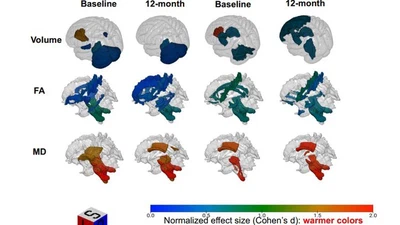
Precise disease heterogeneity and progression quantification in MSA and Parkinson's disease using machine learning featured image

Precise disease heterogeneity and progression quantification in MSA and Parkinson's disease using machine learning

We developed a machine learning framework to quantify disease heterogeneity and progression in multiple system atrophy and Parkinson's disease using structural and diffusion MRI.
robel-k.-gebre
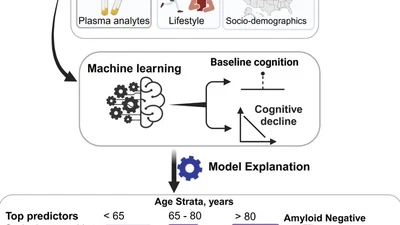
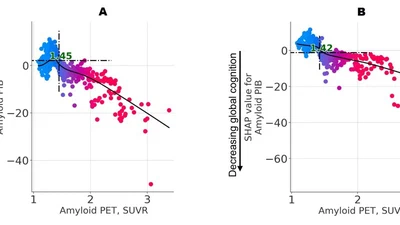
Can integration of Alzheimer's plasma biomarkers with MRI, cardiovascular, genetics, and lifestyle measures improve cognition prediction? featured image

Can integration of Alzheimer's plasma biomarkers with MRI, cardiovascular, genetics, and lifestyle measures improve cognition prediction?

We tested whether combining plasma biomarkers, genetics, cardiovascular risk, and lifestyle measures with MRI improves prediction of cognitive decline beyond any single data …

robel-k.-gebre
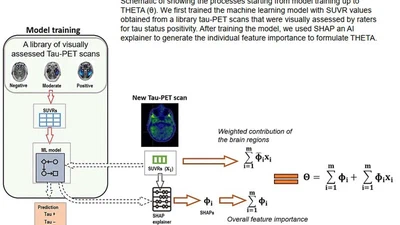
Advancing Tau PET Quantification in Alzheimer Disease with Machine Learning: Introducing THETA, a Novel Tau Summary Measure featured image

Advancing Tau PET Quantification in Alzheimer Disease with Machine Learning: Introducing THETA, a Novel Tau Summary Measure

We introduce THETA (Tau Heterogeneity Evaluation in Alzheimer's Disease), a novel tau PET summary metric that captures the full spatial heterogeneity of tau deposition across the …

robel-k.-gebre
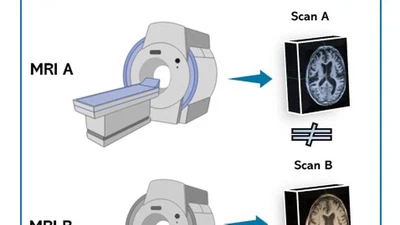
Cross-scanner harmonization methods for structural MRI may need further work: A comparison study featured image

Cross-scanner harmonization methods for structural MRI may need further work: A comparison study

We conducted a systematic comparison of cross-scanner harmonization methods for structural MRI and demonstrated that widely adopted techniques may not perform as reliably as the …

robel-k.-gebre
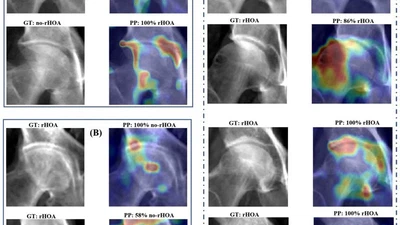
Detecting hip osteoarthritis on clinical CT: A deep learning application based on 2-D summation images derived from CT featured image

Detecting hip osteoarthritis on clinical CT: A deep learning application based on 2-D summation images derived from CT

We developed the first deep learning application for detecting hip osteoarthritis from 2-D summation images derived from routine clinical CT scans.

robel-k.-gebre
Recent Publications
(2026). Chapter 8 - Artificial intelligence: Relevance and applications in dementia. Artificial Intelligence and Brain-Computer Interfaces in Healthcare, Academic Press.
DOI
Recent & Upcoming Talks
Create Beautiful Presentations with Markdown featured image

Create Beautiful Presentations with Markdown

Discover how to create stunning, interactive presentations using simple Markdown — no PowerPoint, Keynote, or vendor lock-in required.

avatar
https://iborz.org/
Recent News
Trending
⚡️ Turn Jupyter Notebooks into Blog Posts featured image

⚡️ Turn Jupyter Notebooks into Blog Posts

Publish your data science and research directly from Jupyter Notebooks. No screenshots required.

avatar
https://iborz.org/
Trending
🎉 Easily create your own simple yet highly customizable blog featured image

🎉 Easily create your own simple yet highly customizable blog

Take full control of your personal brand and privacy by migrating away from the big tech platforms!

avatar
https://iborz.org/
🧠 Sharpen your thinking with a second brain featured image

🧠 Sharpen your thinking with a second brain

Create a personal knowledge base and share your knowledge with your peers.

avatar
https://iborz.org/
📈 Communicate your results effectively with the best data visualizations featured image

📈 Communicate your results effectively with the best data visualizations

Use popular tools such as HuggingFace, Plotly, Mermaid, and data frames.

avatar
https://iborz.org/
👩🏼‍🏫 Teach academic courses featured image

👩🏼‍🏫 Teach academic courses

Embed videos, podcasts, code, LaTeX math, and even test students!

avatar
https://iborz.org/
✅ Manage your projects featured image

✅ Manage your projects

Easily manage your projects - create ideation mind maps, Gantt charts, todo lists, and more!

avatar
https://iborz.org/