Robel K. Gebre

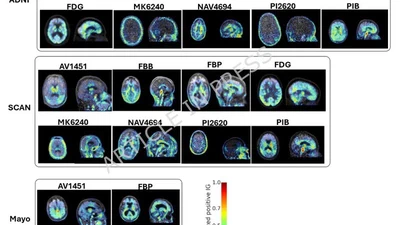
Automated PET tracer classification in multi-site, multi-cohort studies using deep learning featured image

Automated PET tracer classification in multi-site, multi-cohort studies using deep learning

Deep learning classifies brain PET radiotracers directly from scans across sites and cohorts, improving metadata quality control.

robel-k.-gebre
•

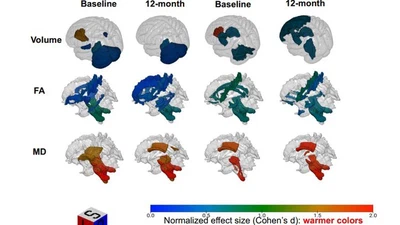
Regional diffusion imaging measures to disentangle SVD-related hypertensive arteriopathy versus cerebral amyloid angiopathy

A study of diffusion MRI signatures linked to hypertensive arteriopathy and cerebral amyloid angiopathy in cerebral small vessel disease.
sheelakumari-raghavan
•
Precise disease heterogeneity and progression quantification in MSA and Parkinson's disease using machine learning featured image

Precise disease heterogeneity and progression quantification in MSA and Parkinson's disease using machine learning

We developed a machine learning framework to quantify disease heterogeneity and progression in multiple system atrophy and Parkinson's disease using structural and diffusion MRI.

robel-k.-gebre
•

Chapter 8 - Artificial intelligence: Relevance and applications in dementia

A book chapter reviewing AI applications in dementia research including imaging biomarkers, machine learning classification, and disease progression modeling.
sheelakumari-raghavan
•
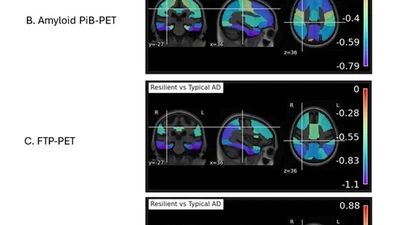
Precise Estimation Of Heterogenous Global Tau Burden In The Brain Sheds Light On Cognitive Resilience Mechanisms featured image

Precise Estimation Of Heterogenous Global Tau Burden In The Brain Sheds Light On Cognitive Resilience Mechanisms

We applied the THETA score to investigate cognitive resilience mechanisms in individuals with heterogeneous global tau burden.

robel-k.-gebre
•

Harmonization Remains Unresolved: The Case of White Matter Hyperintensity Using ComBat And Deming Regression

We evaluated ComBat and Deming regression for harmonizing white matter hyperintensity measurements across scanners and demonstrated that harmonization challenges persist.

calvin-d.-reyes
•

Diffusion Imaging Measures to Disentangle SVD-related Hypertensive Arteriopathy versus Cerebral Amyloid Angiopathy

We used diffusion imaging measures to distinguish between hypertensive arteriopathy and cerebral amyloid angiopathy contributions to small vessel disease.

sheelakumari-raghavan
•

Developing scanner change invariant brain age models for aging and dementia studies

We developed brain age prediction models designed to be invariant to MRI scanner changes for use in aging and dementia studies.

siddhartha-satpathi
•

Automatic Classification of Head MR Series

We developed an automatic classification system for head MR series to streamline neuroimaging data management.
robert-i.-reid
•
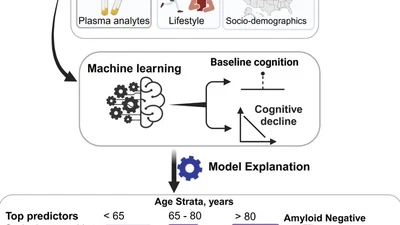
Can integration of Alzheimer's plasma biomarkers with MRI, cardiovascular, genetics, and lifestyle measures improve cognition prediction? featured image

Can integration of Alzheimer's plasma biomarkers with MRI, cardiovascular, genetics, and lifestyle measures improve cognition prediction?

MRI, plasma biomarkers, genetics, cardiovascular risk, and lifestyle measures were compared for predicting cognitive decline.
robel-k.-gebre
•
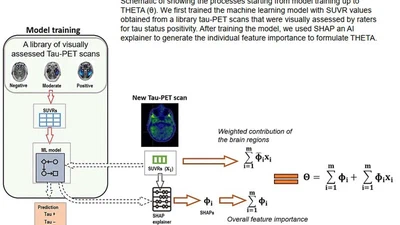
Advancing Tau PET Quantification in Alzheimer Disease with Machine Learning: Introducing THETA, a Novel Tau Summary Measure featured image

Advancing Tau PET Quantification in Alzheimer Disease with Machine Learning: Introducing THETA, a Novel Tau Summary Measure

THETA is a machine-learning tau PET measure that captures the spatial pattern of tau deposition across the brain in Alzheimer's disease.

robel-k.-gebre
•

Mapping neuroimaging using artificial intelligence to detect hypersomnia and its neurobiological correlates

We applied AI methods to neuroimaging data to detect hypersomnia and characterize its neurobiological correlates.

diego-carvalho
•

Machine Learning Models of Polygenic Risk for Enhanced Prediction of Alzheimer Disease Endophenotypes

We developed machine learning models integrating polygenic risk scores for enhanced prediction of Alzheimer's disease imaging and fluid biomarker endophenotypes.

nathaniel-b.-gunter
•

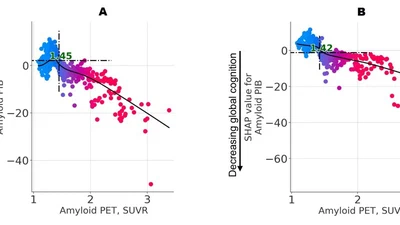
Validation Of the Tau Heterogeneity Evaluation in Alzheimer's Disease (THETA) Score Using Longitudinal and Histopathology Data

We validated the THETA score using longitudinal PET data and histopathology, demonstrating its association with disease progression and neuropathological staging.
robel-k.-gebre
•
Identifying transition points in AD biomarkers using machine learning: A supplement to the reliable worsening method featured image

Identifying transition points in AD biomarkers using machine learning: A supplement to the reliable worsening method

We developed a machine learning method to identify transition points in Alzheimer's disease biomarkers as a supplement to the reliable worsening method.

robel-k.-gebre
•

Chronic Medical Conditions and Dementia Risk: Brain Age Models for Quantifying Impact and Understanding Mechanisms

We used brain age models to quantify the impact of chronic medical conditions on dementia risk.

xi-yu
•

NODDI May Be More Sensitive to Neurodegenerative Changes Than Structural MRI

We compared NODDI diffusion imaging with structural MRI for sensitivity to neurodegenerative changes.

xi-yu
•

Genetic risk scores enhance the diagnostic value of plasma biomarkers of brain amyloidosis

We demonstrated that genetic risk scores enhance the diagnostic accuracy of plasma biomarkers for detecting brain amyloidosis.

vijay-k.-ramanan
•

A Novel Approach to Encode Two-Way Epistatic Interactions Between Single Nucleotide Polymorphisms

We developed a novel method to encode two-way epistatic interactions between single nucleotide polymorphisms for machine learning applications in genetics.
nathaniel-gunter
•
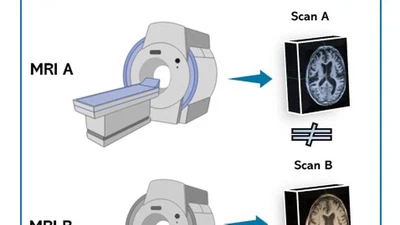
Cross-scanner harmonization methods for structural MRI may need further work: A comparison study featured image

Cross-scanner harmonization methods for structural MRI may need further work: A comparison study

A systematic comparison questions the reliability of widely used cross-scanner harmonization methods for structural MRI.
robel-k.-gebre
•
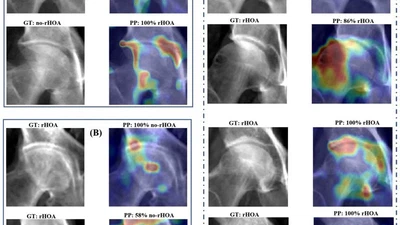
Detecting hip osteoarthritis on clinical CT: A deep learning application based on 2-D summation images derived from CT featured image

Detecting hip osteoarthritis on clinical CT: A deep learning application based on 2-D summation images derived from CT

We developed the first deep learning application for detecting hip osteoarthritis from 2-D summation images derived from routine clinical CT scans.

robel-k.-gebre
•

Preparation of filter by alkali activation of blast furnace slag and its application for dye removal

We developed a filter using alkali-activated blast furnace slag for dye removal from wastewater.

mohammad-amzad-hossain-bhuyan
•

Discrimination of Low-Energy Acetabular Fractures from Controls Using Computed Tomography-Based Bone Characteristics

We identified CT-based bone structural characteristics that discriminate patients with low-energy acetabular fractures from matched controls.

robel-k.-gebre
•

Structural risk factors for low-energy acetabular fractures

We identified structural risk factors for low-energy acetabular fractures in the elderly using computed tomography.

robel-k.-gebre
•